Machines don’t warn you before they start. One moment, a conveyor is idle—quiet, harmless. The next, a maintenance worker reaches in to clear a jam, and an automated restart rips through their arm. This isn’t a worst-case fantasy. It happens. And nearly every incident like it traces back to one failure: a missing or poorly communicated lockout tagout safety message.
- The core purpose of a lockout tagout (LOTO) safety message isn’t just compliance—it’s clarity. It’s ensuring that every person who approaches a machine under maintenance knows two things instantly:
- This equipment is shut down.
- It must not be operated until the message is removed by the authorized person.
Without this communication, even the strongest mechanical locks become meaningless.
Why a Lockout Tagout Safety Message Matters Beyond Compliance
OSHA’s standard 29 CFR 1910.147 mandates energy control procedures. But passing an audit isn’t the goal—preventing amputations, electrocutions, and fatalities is.
A lockout tagout safety message transforms a procedural requirement into a visible, unambiguous alert. Consider this real-world example: At a Midwest food processing plant, a technician locked out a slicer but failed to attach a tag. A co-worker, unaware of the maintenance, re-energized the line. The result: a severe hand injury.
Tags do what locks cannot—they communicate. A lock prevents operation. A tag explains why.
The message must answer five critical questions: - Who applied the lock/tag? - Why is the equipment locked out? - When was it locked? - What energy sources are controlled? - How long will the outage last?
Leaving any of these blank invites risk.
Anatomy of an Effective Lockout Tagout Safety Message
A good LOTO tag isn’t a generic “Do Not Operate” notice slapped on a valve. It’s a precise, traceable, and durable communication tool.
Key Elements of the Message
- Employee Name & Contact Info
- Personal accountability is non-negotiable. “John Doe – Ext. 412” creates ownership. Anonymous locks are red flags.
- Reason for Lockout
- “Repairing motor overheating” is better than “Maintenance.” Specificity prevents misunderstandings during shift changes.
- Date & Time Applied
- Time-sensitive tasks, like confined space entry, depend on this data. It also helps supervisors track workflow delays.
- Equipment ID
- Use a standardized identifier: “Pump #4A – North Line” or “Conveyor C-7 Main Drive.” Vague references like “big mixer” fail under pressure.
- Energy Type(s) Isolated
- List them: electrical, pneumatic, hydraulic, gravity, chemical. This ensures all sources are addressed—not just the obvious ones.
- Clear Warning Statement
- Use strong, OSHA-aligned language: “Danger – Do Not Start, Energize, or Operate. Authorized Maintenance in Progress.”
Design That Works in Harsh Conditions
Tags must survive. A paper tag disintegrating in a steamy boiler room is worse than useless—it’s deceptive.
Best practice: Use durable polyester or vinyl tags with UV-resistant printing. Lamination helps. Attach with non-reusable cable ties or lockout hasps that resist tampering.

Color coding boosts recognition: - Red – Stop, danger, energy isolation - Yellow – Caution, warning - Orange – Mechanical hazard
Red tags paired with red locks create visual consistency across sites.
Common Mistakes That Undermine LOTO Safety Messages
Even well-designed programs fail due to human behavior and procedural gaps.
Using Tags Without Locks Tag-only systems are fragile. A tag says “don’t start.” A lock physically prevents it. OSHA allows tags only when locks aren’t feasible—and even then, extra safeguards are required.
Blank or Incomplete Tags A tag missing the employee’s name turns accountability into guesswork. Never allow blank fields. Use pre-filled tags with check-box options where appropriate.
Group Lockout Confusion In team maintenance, a single master lock often controls multiple energy sources. Each technician applies their personal lock to the group hasp. But if the safety message only names one person, others become invisible.
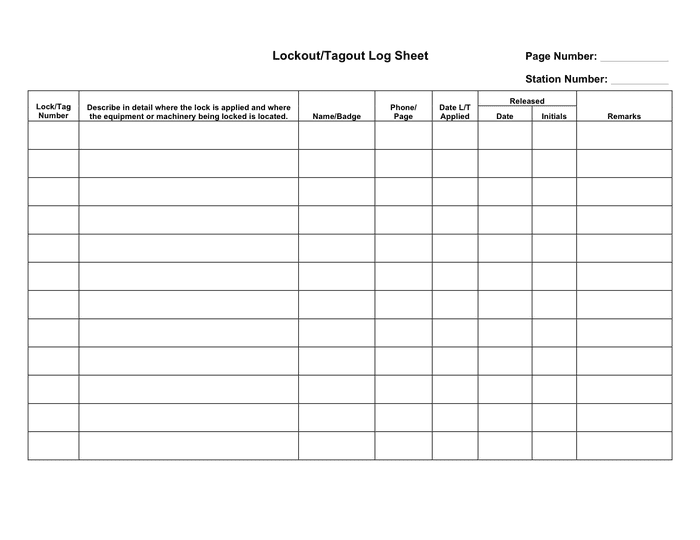
Fix: Use a group lockout log sheet attached to the hasp. List all involved, tasks, and estimated completion times.
Shift Changeovers Without Handoffs Lockouts spanning shifts demand formal transfer. The outgoing technician must brief the replacement, re-apply their lock, and update the tag. Skipping this step breaks the chain of control.
Tags Left in Place After Work Completes A lingering tag breeds complacency. Workers start ignoring all tags. Remove locks and tags immediately upon re-energization. Document the removal in a log.
Real-World Use Cases: How Messages Prevent Disasters
Case 1: Preventing a Chemical Release At a pharmaceutical plant, a valve needed replacement on a reactor containing pressurized solvent. The maintenance tech applied a lock and tag stating: “Valve Replacement – Solvent Line Isolation – Jane Miller, 8:15 AM – Do Not Pressurize.”
Two hours later, operations tried to restart the line. The tag stopped them. Reviewing the message, they discovered the repair wasn’t complete. A restart would have ruptured the open line.
Case 2: Avoiding Electrocution in a Data Center An electrician was troubleshooting a PDU (power distribution unit). He locked the breaker but forgot the tag. A junior engineer, seeing the breaker off, assumed it was routine downtime and flipped it back on.
Sparks. A near-miss. Post-incident review confirmed: no visible message = assumed safety. The facility now uses dual verification—lock plus photo confirmation logged in their CMMS.
Case 3: Machine Guarding During Setup A packaging line operator routinely bypassed guards to adjust film tension. One day, a maintenance worker locked the machine for a software update. He used a tag with a QR code linking to the work order.
The operator scanned it, saw the task, and waited. The message didn’t just warn—it informed. Downtime dropped because miscommunication ended.
Integrating Safety Messages into Your LOTO Program
A tag isn’t a standalone fix. It’s part of a system.
Training That Sticks Annual training isn’t enough. Use real tag examples in drills. Have workers critique incomplete or misleading messages. Role-play shift handoffs.

One auto plant uses “tag scavenger hunts”—teams find and correct faulty lockout scenarios in mock setups. Retention jumps by 60%.
Audit Your Tags Quarterly Walk through your facility. Check for:
- Faded, torn, or missing tags
- Blank fields
- Tags still on energized equipment
- Use of personal locks on group hasps
Document findings. Address trends.
Digital Enhancements (Without Replacing the Physical Tag) Some sites use smart tags with QR codes or NFC chips. Scanning pulls up: - Work order details - Confined space permits - PPE requirements - Emergency contacts
The physical tag remains. The digital layer adds context. But never rely solely on tech—batteries die, networks fail.
Building a Culture Where the Message Is Respected
Compliance is the floor, not the ceiling.
Leaders must model behavior. When a supervisor sees a lockout tag, they don’t override it “just this once.” They ask, “Who applied this? Is everything okay?”
Recognition helps. Spotlight teams with perfect LOTO records. Share near-miss stories where a tag made the difference.
Post visual reminders near high-risk machines: “See a tag? Don’t touch. Don’t start. Find the owner.”
Make silence deadly. Make intervention expected.
Final Checklist: Optimize Your Lockout Tagout Safety Message
Use this before every maintenance cycle:
- [ ] Is the tag attached to the lock or energy-isolating device?
- [ ] Does it include the worker’s name and contact?
- [ ] Is the reason for lockout clearly stated?
- [ ] Are all isolated energy sources listed?
- [ ] Is the date and time visible?
- [ ] Is the warning language unambiguous?
- [ ] Is the tag durable and legible in the environment?
- [ ] Have all affected employees been notified?
A lock stops a machine. A message stops a tragedy. Never underestimate the power of a well-written tag.
Act now: Audit your next lockout. Is the message clear enough for a new hire to understand—without asking a single question?
FAQ
What should a lockout tagout safety message include? It must list the employee’s name, reason for lockout, date/time applied, equipment ID, energy types isolated, and a clear danger warning.
Can you use a tag without a lock? Only if a lock is not feasible. OSHA requires additional protective measures in tag-only scenarios, like continuous supervision.
Who can remove a lockout tagout device? Only the authorized employee who applied it, unless a formal retrieval procedure is followed under documented conditions.
How long can a lockout tag remain in place? Only as long as the maintenance or servicing requires. Remove it immediately after equipment is safely re-energized.
Are digital lockout tags acceptable? Digital tags (QR/NFC) can supplement, but not replace, physical tags and locks. The primary message must be visible and durable.
What’s the difference between lockout and tagout? Lockout physically isolates energy (e.g., padlock on a breaker). Tagout is the warning system. Both are required for full compliance.
How often should LOTO procedures be reviewed? At least annually, or whenever equipment, processes, or personnel change.
FAQ
What should you look for in Lockout Tagout Safety Message: Protect Workers, Prevent Accidents? Focus on relevance, practical value, and how well the solution matches real user intent.
Is Lockout Tagout Safety Message: Protect Workers, Prevent Accidents suitable for beginners? That depends on the workflow, but a clear step-by-step approach usually makes it easier to start.
How do you compare options around Lockout Tagout Safety Message: Protect Workers, Prevent Accidents? Compare features, trust signals, limitations, pricing, and ease of implementation.
What mistakes should you avoid? Avoid generic choices, weak validation, and decisions based only on marketing claims.
What is the next best step? Shortlist the most relevant options, validate them quickly, and refine from real-world results.